
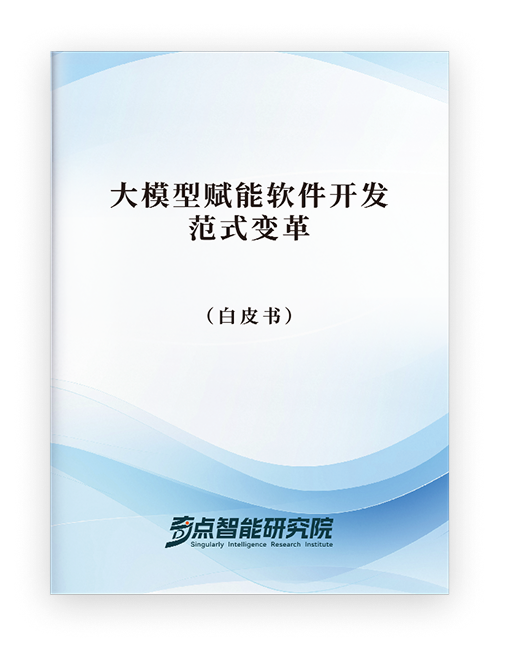
The LLM-Driven Paradigm Shift in Software Development
Software development stands at a historic crossroads. The industry is embarking on a paradigm revolution in development, one driven by the intelligence of LLMs. This White Paper, The LLM-Driven Paradigm Shift in Software Development, is designed to systematically distill our core insights and forward-thinking perspectives from the front lines of this transformation. It serves as an action guide and a strategic framework for the vast community of software developers, tech leads, CTOs, CIOs, and other technology decision-makers navigating this monumental wave of change.
Software development is at a historic crossroads. Fundamentally, the software industry is initiating a paradigm revolution in development, driven by the intelligence of LLMs. This is no mere augmentation of efficiency tools or optimization of processes, it is a paradigm shift that touches upon the very essence of software development: its core cognition, capability boundaries, and collaborative models. This transformation will permeate every stage of the software development lifecycle. The White Paper aims to systematically distill our core insights and forward-thinking perspectives from our practice in this intelligent software development paradigm shift.
This White Paper will delve deep into:
- 1.Hallmarks of the Intelligent Development Paradigm Shift: Analyzing how LLMs transcend traditional automation tools to become an extension and augmentation of a developer's cognitive capabilities. We trace the evolution from Copilot to Agent, a leap that propels the development paradigm from "human-operates-tool" to "deep human-AI synergy."
- 2.A Landscape of Intelligent Practices Across the Full Lifecycle: Presenting a detailed map of how LLMs empower every stage—from requirements and design to coding, testing, review, refactoring, debugging, and operations. We provide maturity assessments, best practices, and potential challenges, offering a clear roadmap for intelligent development.
- 3.The New Paradigm of Human-AI Collaboration: Redefining the role of the developer and exploring how to construct efficient, secure, and trustworthy human-LLM collaborative mechanisms that maximize the strengths of both. We will discuss the critical importance of new core skills, evolving from "Prompt Engineering" to "Context Engineering."
- 4.The Adaptive Evolution of Organizations and Processes: Investigating the transformative demands that the intelligent paradigm places on team structures, R&D methodologies (like Agile and DevOps), knowledge management, and quality control standards. We propose recommendations for organizational and procedural re-engineering.
- 5.Navigating Capability Frontiers and Risks: Objectively analyzing the current limitations of LLMs in areas such as code generation quality, security, interpretability, and domain adaptability. We will explore strategies and frameworks for addressing key risks like hallucinations, security vulnerabilities, intellectual property, and ethical compliance.
The mission of this White Paper is to provide an action guide and a forward-thinking framework for the software developers, team leaders, and technology executives (CTOs/CIOs) immersed in this massive wave. We profoundly recognize that embracing LLMs is far more than adopting a new tool or plugin. It demands that we move beyond a superficial, "tool-dependent" mindset and, from a strategic high ground, re-examine the very nature, processes, and value chain of software development.
Past Reports
Discerning Industry Trends, Distilling Best Practices
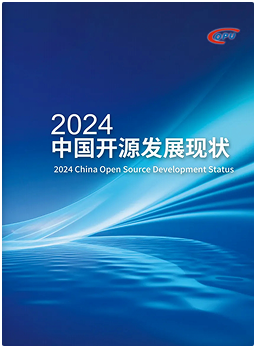
Blue Book on the Current Status of Open Source Development in China
Deep analysis of the current status of open source development in China, covering multiple dimensions from infrastructure to application level. The Chinese open source community has shown significant activity, with a growing number of developers and contributors, and a growing influence of open source projects in both domestic and international contexts. China has become the second largest country in the world in terms of the number of open source participants, with the fastest growth rate.
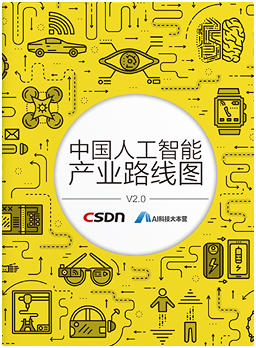
AI Industry Roadmap in China
This roadmap begins with AI basic resources, AI basic technologies, and the main application domains of AI technologies. Based on the support of ten invited industry experts and numerous actual case studies, it explores the paths of enterprise intelligence upgrade in different industries. It also first puts forward the AIMM —— Enterprise Intelligence Maturity Model, which becomes a beneficial reference for Chinese enterprises to implement AI transformation.

 Phone 400-821-5876
  Email service@boolan.com